Showing posts with label Cinema (C-WAN). Show all posts

12/06/2015

Report on Women's Film Festival Osaka 2015


I went to the International Women Make Sister Waves Film Festival, which was held on November 14 and 15, 2015, in Toyonaka City, Osaka. Commemorating the 45th  anniversary of women’s liberation movement, the forth Film Festival was entitled “We’re Still in the Midst of Lib!” and a total of seven documentary films were screened in two days. A special talk by the women in their 70s about “the 45 Years of Women’s Lib—Never-ending Journey on the Road of Lib—was also held, as well as discussions after screenings. The Festival had other sorts of festivities, including panel exhibition showing the women’s lib movement in Osaka and a party celebrating the movement’s 45th anniversary.


The screening program of the Festival included the premiere shows of three overseas films as follows: Spanish and Turkish films documenting feminists movements which spread in respective countries from the end of 1970s to 1980s, and a Canadian film, Lesbiana: A Parallel Revolution*, which reviewed the radical lesbians’ movement generated from the women’s lib movement in the 1970s mainly through the interviews of those radical feminists. A Japanese film Looking for Fumiko represented a dialogue between the women engaged in the 1970s lib movement and younger generations. The other Japanese film 30 years' of Sisterhood : Women in the 1970s Women's Liberation Movement in Japan was composed of  narratives of twelve women who had been involved in the lib movement in those days and have been living a life for liberation still now.


Watching these films, I felt that I could vividly re-experience the spread of various women’s movements simultaneously generated in various places of the world and the power of solidarity among individual women who spontaneously took part in the movements to let their voices heard. That was because the films were directed by women who aimed to listen carefully to voices of those women engaged in the movements. Even though their problems and difficulties were different from ours, we, who are living a contemporary life somehow with uneasiness, could receive positive messages and hopes from each of those films.


Above all, the words which I found most inspiring were those uttered by a woman in the Spanish film about La Sal in Barcelona. “For me, ‘feminism’ is uncomfortable behaviorism,” she said, “because you could never keep away from feminism as it involves the questions of your own life and identity, while you could forget about the missiles (she means other kinds of social movements) you would not take home to your bed.” Yes! I agreed to those words with much empathy.

Another impressive phrase was spoken by a women who appeared in Lesbiana: A Parallel Revolution. She said “I think it necessary that we should be connected through recognition of our heterogeneity rather than homogeneity." The linkage based on heterogeneity might not be attainable particularly in Japan where homogeneity tends to be most highly regarded. The importance of heterogeneity, however, should be better appreciated in our actual activities and movements today.


Original article written by NAKAMURA Natsuko
Translated by FUKUOKA.A.A

11/29/2015

Movie Review: Freedom Writers

Acquiring Their Own “Words” and “Voices” to Change Their Lives


Erin Gruwell, a novice high school teacher, comes in charge of a class composed of “at-risk” students.  Growing up in slums where violence and murder happen every day, the students segregate themselves into the racial groups and fight against each other in the cycle of hatred, just like adults do outside of the school. They have no hopes in their own lives and no enthusiasm to learn. Nevertheless, Erin believes the power of education and, all by herself, begins struggling to change the students’ lives. She gives her students some books to read and diaries to write about themselves, because she believes that they can understand and empathize with others through reading and writing. She tries to teach them how big the world is and how to describe themselves in their own words.
 
Regarding her as a just another white woman from a rich family, the students disapprove and sneer at Erin. Erin doesn’t sympathize, look down or give up on them because she knows that their attitudes towards her result from their immaturity and pain. Instead, she respects each of her students as a person and gradually, her honesty touches a chord with them. They open up their hearts to her through their own “words” and “voices” they have acquired. This story touched me deep inside.

This movie is based on a best-selling book titled The Freedom Writers Diary, which was written by actual high school students and published in 1994. The every story in it is too harsh to believe that it’s true, but that is the reason why the students’ voices are filled with hopes (I recommend this book as well as the movie).

The theme song of the movie is “A dream” by COMMON feat. WILL. I. AM, which samples the famous speech by Martin Luther King Jr, “I Have a Dream”. Every time I listen to the theme, tears well up in my eyes and I think that there is no song that matches with the movie more perfectly than this song.

In this movie, Erin succeeds in developing trust with students and also letting them believe in the power of education, but there is one thing she has to lose: her husband. While she devotes herself in teaching her students to change their lives, he gives up his relationship with her and leaves her. The movie depicts him as a kind of pathetic man who can’t understand his wife’s passion for her career. 

In closing, I’d like to ask you one question. If you had a career which you think you should devote your whole life to and choose over your partner, what would you do? Or, what would you do if your partner had such a career? If you were Erin or her husband, how would you deal with this unanswerable question? 

Original Article by Natsuko NAKAMURA
Translated by N. Tajima

6/30/2015

The Legacy of Frida --- Film Review by Natsuko NAKAMURA

The legacy of Frida Kahlo was uncovered 50 years after her death.
The Japanese photographer, Miyako ISHIUCHI captures the real life of Frida Kahlo as a woman.

This film depicts “the record” and “the memories” of the two women and how their lives have crossed.


Frida Kahlo is one of the most famous female painters in Mexico. She was highly recognized as a surrealism artist in Europe as well.  She lived her life positively despite her physical disability and the turbulence of the modernization of Mexico.  Her way of life resonates with many people from all over the world.

In 2004, 50 years after her death, the legacy of Frida was uncovered.  In 2012, a project to take pictures of her belongings was launched by a Mexican curator, and Miyako Ishiuchi, a world-famous Japanese photographer, was chosen to take the photos. When Ishiuchi visited the Frida Kahlo Museum called "the Blue House" in Mexico City, she saw each of the enormous items arranged in front of her, such as Frida's Mexican traditional costumes and accessories in which her identity originated, and her medicines and corsets which evoked her ceaseless physical pain. They seemed not only to be the evidence that Frida lived with various kinds of "pain" as well as the joy and pride, but also to represent her memories. As a painter, Frida Kahlo depicted what life was all about through her life. How did Ishiuchi face the legacy of Frida and what did she capture in her photographs?


This film shows the whole process of Ishiuchi’s shooting for over three weeks. It describes, in a careful manner, how the photographer faced the legacy and discovered the real life of Frida with her photographs freeing her from her conventional image.

The film is directed by Daisuke Kotani, a Japanese director who are highly acclaimed both domestically and internationally with his documentary film, The Cat That Lived a Million Times. By filming Ishiuchi's shooting process, he also captured the Mexican culture, the tradition passed down from generations to generations, and women living in the present time.

 
This is the documentary about “the record” and “the memories”. The tokens of Frida’s life and the photographs that captured them travel beyond space and time.

In this film, you can discover the new image of Frida Kahlo that no one has ever imagined.


The official website of the film is here.

==============================

Distributed by Nondelaico
Cinematography: Tadasuke KOTANI 
Starring: Miyako ISHIUCHI
2015/Japan/89 min/Japanese, Spanish, English, French
In cooperation with: Embassy of the United Mexican States
Production: Nondelaico
Cooperation in Advertisement: Tereza and Sunny

------------------------------------------------------------
The original article written by Natsuko NAKAMURA
Translated by N. Tajima

2/28/2015

A Movie in My Memory All About My Mother directed by Pedro Almodóvar

Review by Siria


Fascinated by a Woman’s Strong Way of Living


Woman is strong.

That was my first impression of this movie. Woman is strong.
                                                                                                      
The heroine, Manuela, is a single mother who lost her son Esteban in a car accident. He died on his birthday of all others.

She has grieved his death for days until she makes up her mind.

She decides to go to Barcelona to find Esteban’s father.

It’ difficult to make an important decision when you have lost someone you loved. I think only women can do that.

When it comes to romantic relationship, men in general find it harder to forget their love than women. Some are obsessed with the memories in the old days, and their friends get fed up with that.

Manuela has been living with her son peacefully for 18 years since she divorced her husband. But this peace is broken by the great sadness of losing her son. I have never married nor had any child of my own, so her pain is beyond my imagination. In the middle of her grief, she leaves Madrid to look for Esteban’s “father”. And, she does this all by herself. The scene where she leaves for Barcelona reminds me of the innate strength that a woman has inside her.
                                                                                
In Volver, another movie directed by Almodóvar, the “male sex” was excluded from the plot naturally. In All About My Mother, on the other hand, male only exist as the symbol of the “sex”. There are some male characters who underwent a sex-change operation (therefore regarded as female). They had breast implant surgery, but never have their penis removed. In this sense, they are male AND female at the same time. Although they serve as the symbol of male sex, they are never excluded from the plot because the half part of them is female.

Esteban’s father, Lola is also a woman with a penis. She married with Manuela, had breast implant, and now she leads a life almost same as a prostitute’s. In Barcelona, Manuela meets a nun called Sister Rosa and finds that the sister is also pregnant by Lola. Rosa is HIV positive; she dies soon after giving birth to her son. As promised Rosa, Manuela takes care of the newborn baby. Gradually, she gets past her grief of losing her own son, if not completely, and takes her life back.

Despite the title All About My Mother, Manuela’s son dies in the beginning of the story although he was the one who wanted to know all about his mother and farther. It’s intriguing that the story develops from his mother’s view while the movie is titled from the son’s view. Actually, no characters in the story can find out all about Manuela’s life; only the audience can. When you are in despair, you will be fascinated by the lives of Manuela and other strong women in this movie.

----------------------------------------
About the author: Siria was born in Brussels, Belgium. She is half-Japanese and half-English, and grew up in Chiba Prefecture, Japan. In her early days, she studied in the School of International Liberal Studies of Waseda University, believing that she should establish an international career because of her international background. But she felt uncomfortable among many other cosmopolitans and dropped out. After working as an editor and designer of cellphone websites, now she works for a company. She enjoys her free life in her own way tweeting about various topics.
Twitter @Les_Niniches

(Translated by N. Tajima)
                                                                                                                        

7/31/2014

Another Story Pecoross’ Mother and Her Days, a Japanese Drama Film about Nursing Care, Depicts


Directed by Azuma Morisaki
(TC Entertainment, 2/7/2014)
Buy this DVD (jump to an Amazon page)


Written by Yuichi Okano
(Nishi-Nippon Shimbunsha, 7/7/2012)
Buy this book (jump to an Amazon page)


Pecoross' Mother and Her Days (the original Japanese title: Pecoross no Haha ni Ai ni Iku, which literally means “Pecoross Visiting His Mother”) is a well-reputed Japanese drama film directed by Azuma Morisaki, which was voted as the best Japanese film of 2013 by Kinema Junpo, one of the most prestigious movie magazines in Japan. I guess many people have watched the film in a movie theater. This film is based on a manga of the same title by Yuichi Okano, who wrote it from his own experience of caring his mother. A “pecoross” in the title means a small onion, but it is also the pen name of Okano.

The film depicts many different events happening with relation to the care of Yuichi’s demented mother Mitsue, sometimes amusingly, sometimes calmly and empathetically. Yuichi’s cynical and humorous attitude toward Mitsue and the people around her often makes you giggle, and adds a comical taste to this film with the serious theme of nursing care. I believe most of the episodes are familiar to anybody who has experiences of caring. 

But despite the film’s comical interpretation, the nursing care is basically not a laughing matter at all. In those everyday exchanges among the people who are involved with Mitsue, I saw a lot of challenges and difficulties surrounding nursing care, which stirred strongly my emotions. The people in the film also experience swings of emotions, where they one moment feel the joy of living together with Mitsue, but the next hope this endless-looking situation to be finished. The film’s overall lighthearted descriptions even more made me realize the sorrows and uneasiness they are feeling time to time.

This film has another point beyond nursing care. That is the life history of Mitsue, who was born in the 12th year of the Taisho era (in 1924) and now has been losing her sense of time. And in this film, she relives her past life and the audience re-experience it, which was really moving. The beautiful descriptions of times and life which Mitsue and her family have lived also make this film brilliant. In her life, Mitsue had a friend she grew up with and lost her. And Mitsue had a husband who was alcoholic and committed violence against her. 

I felt tears in my eyes as her memories of these events become more and more vivid toward the ending. I cannot forget the overwhelmed expression of Kiwako Harada, who played the young Mitsue, at the time she lost her friend. This scene embodies the injustice of life many women must have felt in the early years of the Showa era (1920s-40s), when they had no other ways to live but to obey somebody else’s will or to serve their husbands. There would also be another findings when you watch this film from Yuichi’s point of view. I totally recommend this film to everybody.

---------------------------------------------------------------------
Original article written by Natsuko Nakamura
Translated by A. Tawara

9/12/2012

Girl's World connecting women---A film by the women for the women

Maiden in Uniform 

Girl's World connecting women---A film by the women for the women


(DVD/ 87 minutes/ Publisher IVC)

Lita


On February 1, 1933 the German film, Madchen in Uniform (1931) (Mädchen in Uniform) was released in Japan. It is a well-known episode that Kashiko Kawakita, wife of the president of Towa Shoji Goshi Co. Ltd. at the time (later Toho Towa Company, Ltd.) took fancy to the film during her honeymoon trip to Europe and bought out its distribution right. The film, made entirely by female director, scriptwriter as well as unknown casts, won the Best Foreign Film Award at the annual Kinema Junpo (a Japanese film magazine which began publication in 1919) that year.

The scene of the film takes place in an all-girl boarding school for daughters from poor soldier families, strictly administered by ridged rules of the Prussian principal. The film opens with a cut of girls in broad-striped dress and black cap walking in a line in silence lead by one of their teachers. Girls are not allowed to chat while walking. Manuela, whose mother just died, is brought into the scene. Under the reign of the principal forcing severe rules and orders, not only the students are deprived of freedom, but also the teachers are so harshly oppressed that they cannot stand against the principal with an iron hand.

Like the rest of the girls, Manuela develops a crush on Ms. Bernburg, a warm-hearted beautiful female teacher.  On the occasion of the principal’s birthday, Manuela plays the main character of Schiller’s Don Carlos in the school play. At the student-only party after the play, Manuela gets drunk drinking a little too much of alcoholic punch and announces her passionate love for Ms. Bernburg in front of all the students gathered in the dining hall. Upon hearing about this scandalous incident, the principal imposes strict punishment on Manuela, banning her from seeing other students and Ms. Bernburg. Having severed contact with Ms. Bernburg, deeply distressed Manuela attempts suicide, but was discovered and saved by some students in the nick of time. Finally, the girls in the boarding school decide to stand against the tyrannical principal.

Listening to such scenario, readers may get an impression of the story as a revolt of oppressed girls against the authoritarian adults. But the film critics of that time highly evaluated the film for doing a good job of portraying delicate sensitivity of young girls in their puberty. However, I believe the real charm of this film is in its descriptive power which displays girl’s world in general. I prefer the scenes of girls having fun to serious ones. For example, I like the scene where Manuela’s room-mate, Iruze takes Manuela to show a photo of her favorite movie star secretly posted on the inside door of her locker as a gesture of welcoming the newcomer to the boarding school. I also like scenes such as girls in underwear making a racket in the washroom, or the scene after the school play where girls are having fun dancing to pop songs in the dining hall. The atmosphere created by these scenes is still so vivid and alive even eighty years after the first release of the film. These scenes displayed the girls living and enjoying their lives to the fullest extent despite having limits and oppressions placed upon them. (continue…)  

Original Article on the WAN Website. Written by Lita on Sep. 2, 2012
Translated  by Yoko Hayami


3/18/2012

Interview with the director of Yellow Cake: The Dirt Behind Uranium

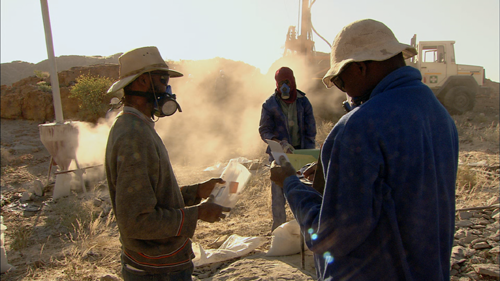
In the documentary film Yellow Cake: The Dirt Behind Uranium, German director Joachim Tschirner depicts how the production of uranium, the feedstock of nuclear power, causes radiation exposure and widespread harm. “Yellow cake” refers to uranium in its refined, powdery state that is used in both nuclear weapons and reactors. "By using uranium, you already have a hand in the crime,” he explains in his interview with writer Shin Yamaaki.


Photo by Shin Yamaaki
――What motivated you to create a movie about uranium mining?
I had some knowledge of the subject through my ten-year experience working in Thüringen in the former East Germany, where the uranium mining corporation Wismut was located. I thought I had something to say about it.

――Wismut was decommissioned in 1990. Did the nuclear incident at Chernobyl influence the discontinuation?
I believe there was some indirect influence. For example, in East Germany, where there hadn't existed any explicit environmental movements, the Chernobyl meltdown became an occasion for much accumulated anxiety to surface, eventually leading people to question the political leadership. However, the decommissioning of Wismut was a national project that coincided with the reunification of Germany. The miners and local residents in fact still had not been informed that the mined metal had been uranium, and of course had no knowledge of the dangers they had been exposed to. 

           © 2010 Um Welt Film Produktionsgesellschaft
――The film shows a variety of people in their respective relations to uranium mining: a Namibian miner who takes a meal in the midst of the powdery dust, the dangers of which he is unaware of, and a female miner who murmurs at home, “So many people get sick every month because of the filthy dust.” When asked if she knows how much radiation she has been exposed to, her silence as well as her facial expression are tragically eloquent. What was your message in the movie?
Nuclear issues tend to be considered only partially—nuclear weaponry, nuclear power, reprocessing, disposal—without a comprehensive picture. Also, the issue of mining has long been neglected and thus has deceived us. I wanted to alarm the world of such predisposed information.

――An Aborigine community in Australia first approved a particular mining operation, later realized its danger and, with support from specialists, prevented the development of another mine. This indeed reminds us, as said in your movie, “Ignorance cultivates the soil where lies flourish.” In your opinion, are the CEOs of the uranium mine ignorant or are they actually deceitful? Worse yet, are they knowing criminals? 
I think they seriously believe that the problems regarding uranium mining can be somehow managed and that it provides more economic benefits, such as employment, than it does harm. The CEOs are, in that sense, faithful to their professional duty, which is to work for the interests of stockholders and the cooperation. However, undoubtedly, they manipulate information. Such corporative attitudes are well-expressed in the words of a journalist from Uranium City, a Canadian equivalent of Wismut: “We cannot obtain the information that we need nor would we be able to decipher it if given any. Ultimately, we happily accept what is given to us by pro-nuclear agents.”

――Let us hear your message in light of the accident at TEPCO’s Fukushima Daiichi Nuclear Power Plant.
The decommissioning of reactors is an emerging issue. In Lubmin, a town in Northern Germany, the decommissioning of a first-generation model nuclear plant has been going on for twenty years, but we still have no sense of how things will pan out. Meanwhile the cost accumulates year by year. In Japan too, who is going to bear the cost of reactor decommissioning that will be required in the near future? We should consider the nuclear issue facing the final phase of reactor decommissioning as well. That is my final message. 

Yellow Cake: The Dirt Behind Uranium
2005-2010, Germany
Distributed in Japan by Pandra
Currently showing at Shibuya Uplink (10:15, 12:30, 14:30, 18:40) and to be screened in Osaka Ciné Nouveau from February 18 and more.
* Please contact the above theaters for updated screening times. For screenings outside Tokyo, visit here (Japanese only).

Joachim Tschirner was born in 1946 in Wittenberge in the former East Germany. He studied Aesthetics and Cultural Theory at Humboldt University, Berlin, from 1970 to 1974 and worked as a film editor from 1975. He became a film director for the production company DEFA in 1980 and founded an independent film label, UM WELT FILM in 1991. His other documentaries include: Say: Heaven. Even When There's None (1984), Canto General: The Great Song of Pablo Neruda and Mikis Theodorakis (1983), At the End, the Concert (1985), A Small Piece of Germany (1991, with Klaus Salge & Lew Hohmann), Kein Abschied - nur fort (1991, with Lew Hohmann), Maxhuette-Cycle (1987-1991), On the Seventh Day Over the Syr Darja (1992-1995), Sieben Tage - Da unten am Indian River (1995), Tapping (1993-1997), and The Aral Sea - Where the Water Ends, the World Ends (1998).

Shin Yamaaki published her first book, Tamesareta Chihō Jichi (The Challenge of Grassroots Democracy: 13 Years of Suzu, a front-line city in a proxy war on Japanese nuclear politics) from Katsura Shobō in 2007, a reportage of the nuclear-development project in Suzu City, Ishikawa Prefecture, for which she was awarded the Yayori Journalist Award and the Peace and Cooperative Journalist Fund Arai Namiko Award. Her current project focuses on Iwaishima Island in the Seto Inland Sea, where she has spent more than 190 days intermittently and been involved with the people protesting the Kaminoseki Nuclear Development for thirty years. Click here for her blog in Japanese.

This article first appeared in a Japanese political magazine, Shūkan Kinyōbi No. 882 (Febrary 19, 2012) and is adapted and reprinted on the WAN website with approval from the publisher and the author. 


Original Article on the WAN Website (March 11, 2012)
Translated and adapted by Aya Kitamura

2/21/2012

Poetry -- The Art of Looking  Film Review by Kei Shimizu

“The most difficult thing for me is being ready to write poetry.” I couldn’t get these words from the main character out of my mind and, for a time, it prevented me from writing this review.

This is because I doubted whether I was mature enough to face the film Poetry. “What does it mean to make a film now, when films are dying?” asks Lee Chang-dong, the director, who made this film while he was asking himself the meaning of making films and writing poetry. He asks his audience the same question.

In the film, a middle-aged woman named Mija is raising her teenage grandson while his mother is working in Pusan. Mija concerns herself with her looks and often surprises others with her unpredictable behaviors, acting just like a little girl.

The story starts when a doctor tells Mija that she is suffering from Alzheimer’s disease. At the same time, the truth of a tragic incident is revealed to her. She happens upon a poetry workshop and enrolls. There she learns that “what is essential in life is looking; it’s all about looking at the world.” She begins trying to find “authentic beauty” in what she sees in her daily life, looking at an apple in the kitchen from various angles, taking a flower by the roadside in her hand, looking from a bench up to leaves blown in the wind. In time, “looking” forces Mija to reflect upon herself and to be ready to write poetry. If Mija represents Lee and the question he has for his audience, what kind of poetry, or words, will we write to express our own answers?

The story develops without major events as it thoroughly eliminates “verbal” explanations and suppresses intense human emotions of human being. With Lee’s impressive direction, only the expressive face of Yun Junghee (as Mija) tells the story, when she leaves her grandson after playing badminton, or when she is wooed as if she were a young woman. As we watch the film, we forget about thinking or crying; we do nothing but “look.”

While she is losing her memories and words little by little, Mija identifies herself with a girl victimized by a tragic incident. Overwhelmed by her overflowing emotions, Mija finally completes her “poetry.” I expect that her poetry will touch the hearts of you readers.
 
At the beginning and the end of the film, there are scenes where a river flows smoothly, implying life and death. If you realize the river, represents something completely different in each scene, even though it looks the same, perhaps it means that you have found an answer to Lee’s question.
(Kei Shimizu, a junior studying film at the art department of Nihon University)


Poetry

(Lee Chang-dong, South Korea, 2010, 139min., distributed by SIGLO/ Kino Eye Japan)


Released on Feb 11 at Ginza Theatre Cinema, Shinjuku Musashino-kan, etc.
(C)2010 UniKorea Culture & Art Investment Co. Ltd. and PINEHOUSE FILM.

Visit the official website: http://poetry-shi.jp/

Original article: http://wan.or.jp/reading/?p=6038
Translated by N. Tajima

1/09/2012

Movie Review: 'Houri no Shima' - Things Destroyed by Nuclear Power Plants

<><>
    
Houri no Shima (Holy Island) (directed by Aya Hanabusa /2010) 

Things Destroyed by Nuclear Power Plants by Karin Koretsune

Iwaishima, in Yamaguchi Prefecture is a heart-shaped island located in the Seto Inland Sea.

30 years ago, a plan was drawn up to build a nuclear power plant on the shore of mainland merely 4 kilometers across the sea facing the island. Since then, the islanders continued to protest the construction of nuclear power plant.

The site for building nuclear power plants are targeted at under-populated areas considered to have no economic value. This movie depicts "things" that exist in a place considered by certain groups of people to have nothing.

   
Catching bream with a fishing rod is
common in Iwaishima.
“Welcome” says Mr. Shomoto,
“thank you so much for coming” 
as he reels each bream onto the boat. 
One and only female fisher on the island,
Tamiko, tells us, “The sea is our life
itself. It is our livelihood and it has
nurtured all of us.” These are the words
of people who live together with the sea.

On a mountain slope is a terraced paddy field constructed like a castle in the sky. There are piled up rocks about the height of a human being on a cliff. They were made by manpower since machines cannot enter the area. We were told that rocks were carried to the top and dropped.

The terraced paddy field took 30 years to make by Kamejiro, the grandfather of 77-year-old current rice grower, Manji Taira, who has been growing rice at this paddy since he was 7 years old.
Kamejiro predicted that this terraced paddy field will no longer be used after his grandson retires. He will not have any regrets if the paddy field becomes a moorland. “City people strive for things bigger than themselves,” says Manji who knows the limitations of human power and will not try to control nature beyond his powers.

Manji always visits his friend’s house across the road to spend the evening drinking tea together. When he dozes off, a friend will gently put a blanket over him.

There are about 200 empty houses on the island. The reason for keeping the ownership of these houses is because many people wish to return to the island after retiring from work in the cities. There’s plenty of enjoyable time to spend with people on the island.
”The life on the island is behind the times and people on the island have been abandoned by their children and grandchildren”, say some people who tries to justify building the nuclear power plant. The reality is that there are no convenience stores or museums, but there is a strong will of the people to live cooperatively with the surrounding ocean and mountains. There are also warm human ties. There are people on the island who recognize these factors as important values and have secured them.
Another documentary film about Iwaishima, Ashes to Honey (directed by Hitomi Kamanaka/ 2010) recaptures the life on the island as how our society should function in the future. We should strive for a self-sustainable society that can exist together with natural environment. Furthermore, it shows a concrete way to remove all nuclear power plants, following the footsteps of Sweden. The official site of Ashes to Honey in English can be accessed from here

For those who say nuclear power plant is the answer to new industry necessary to urbanize the rural areas that have been left behind the times, please come and see the movie, Houri no Shima and find out what the islanders have valued over the years and discover whether the people will be truly happy or not after losing the things they value.

Original article on the WAN Website dated 8/16/11   http://wan.or.jp/reading/?p=4150
Translated and Adapted by M. Doioka

9/18/2011

CINEMA: Yoshiko & Yuriko (dir. Sachi Hamano, 2011)

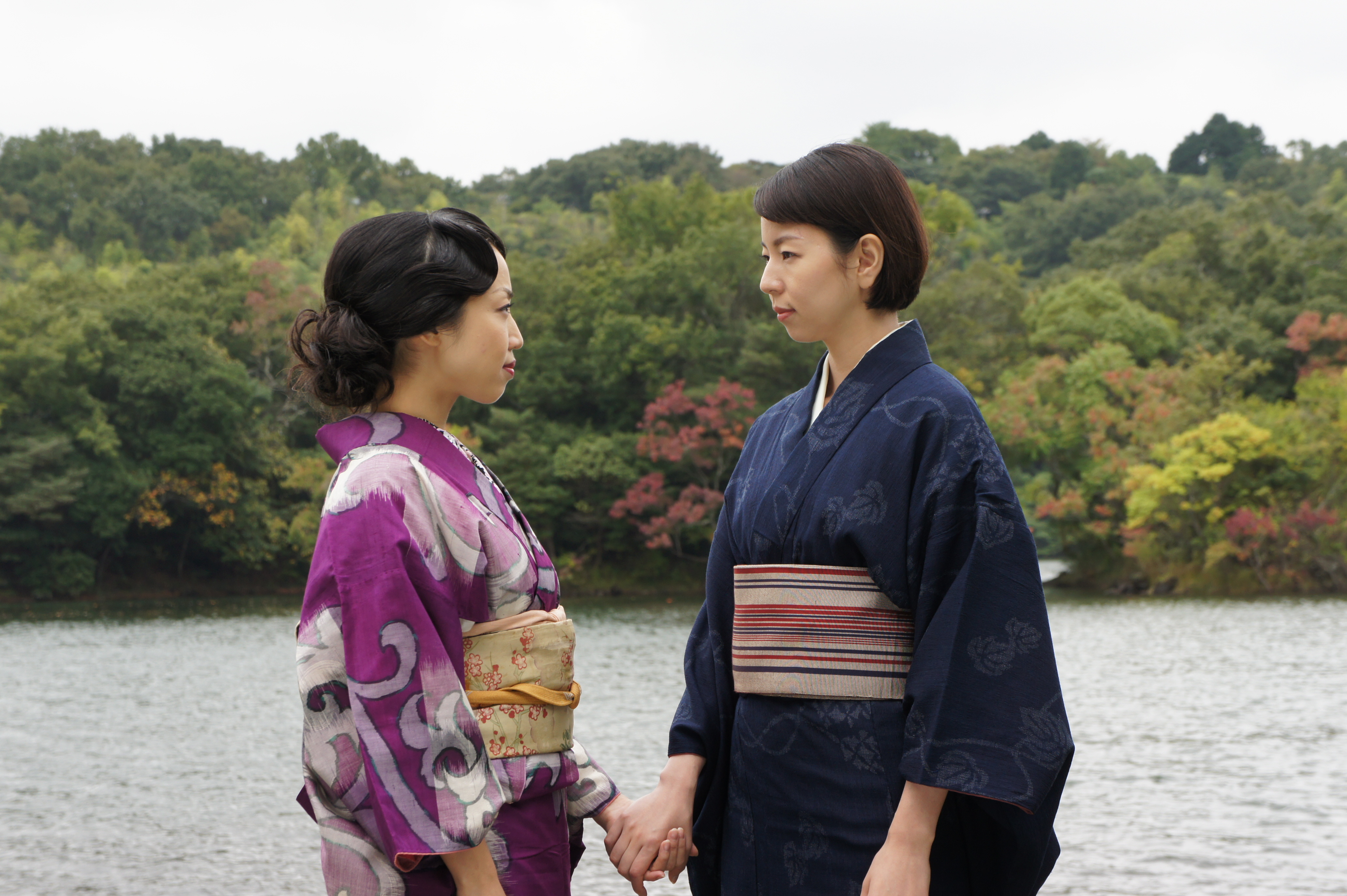
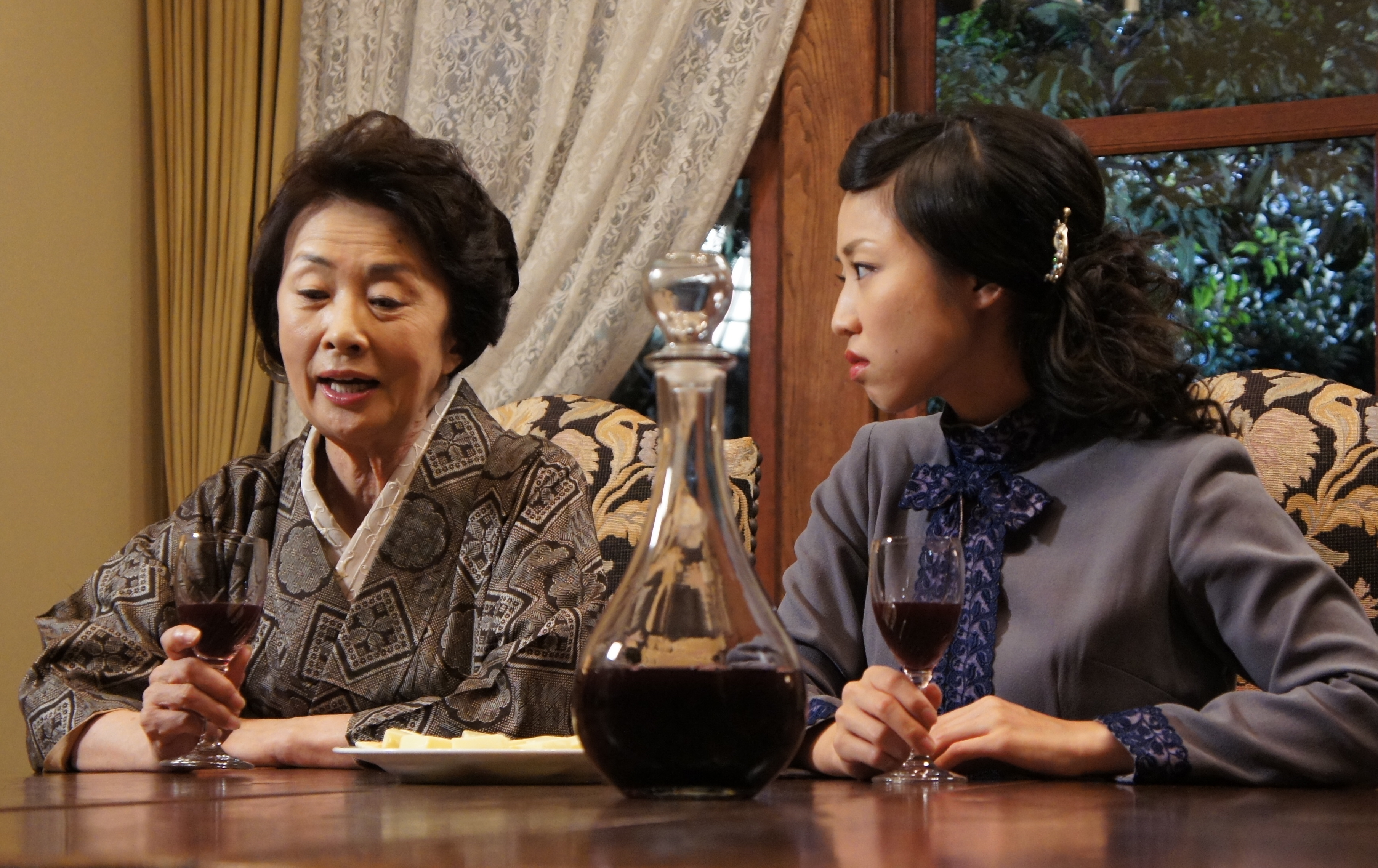
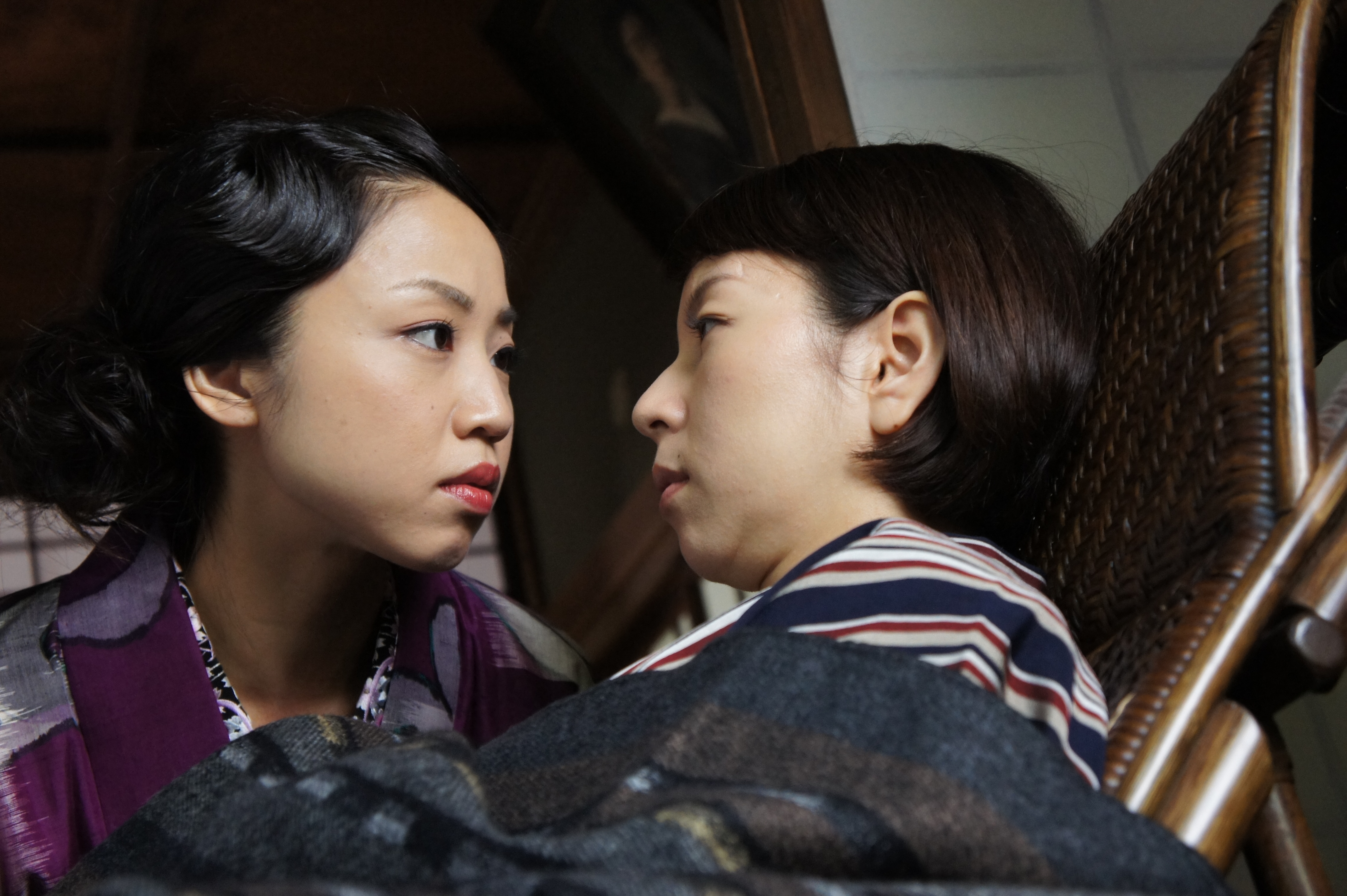
Sachi Hamano's latest film, Yoshiko & Yuriko, will be screened at Eurospace in Shibuya from October 22, 2011. The film is based on the true story of the relationship between two women,  Yoshiko Yuasa and Yuriko Chujo (later Yuriko Miyamoto).

Yuasa was a scholar and renowned translator of Russian literature, who, during the Taisho Period (1912-1924), was involved in a relationship with Chujo, an influential proletariat writer in wartime and postwar Japan. 


Other Venues and Dates
June 18- Shizuoka Mirano (Shizuoka)
October 1-14 Kyoto Cinema (Kyoto)
October 18-21 Cinema Skhole (Nagoya)
November 19-25 Cinema e-ra (Hamamatsu)

Translated and adapted by Eiko Saeki