11/30/2013

Chernobyl Children’s Fund Made a 2014 Benefit Calendar for Children in Chernobyl and Fukushima

Photo by Ryuichi Hirokawa

The 2014 Calendar for Children in Chernobyl and Fukushima (28th Anniversary) consists of pictures of children in Chernobyl and Fukushima who are spending time at sanatoriums. The following photo for the month of March shows children from Fukushima who are playing energetically with their hands and feet in the sand without caring about radiation. Some of them were born after March 11, so it is the first time for them to enjoy the ocean.


The Chernobyl Children’s Fund has supported the people in the devastated area of Chernobyl since 1991, and it has made a charity calendar every year since 1996. After the nuclear accident at Fukushima on March 11, 2011, the foundation received many responses from people in Chernobyl, well-wishing the children in Japan. The 2013 and 2014 Calendar for Children in Chernobyl include pictures and poems written by children in Chernobyl and Fukushima.

Besides the calendar, the Funds also sells postcards, books and so on. The proceeds are used for medical and relief expenses for children.


Price: 1000 yen
Mailing Cost: 100 yen (up to 2 copies)
             Actual price (3 to 9 copies)
             Free shipping (more than 10 copies)
Payment: Postal Transfer 
                   (Name of the Account) Chernobyl Children's Fund, Japan
                   (Postal Transfer Number) 00160-4-98316 (Transfer in Japan)


☆The Chernobyl Children Fund☆
Fouder/Adviser HIROKAWA Ryuichi
Email: cherno1986@tokyo.email.ne.jp
URL: http://homepage2.nifty.com/chernobyl_children/index-e.html
Office: 207 Maison de Hara, 25 Shirogane-cho, Shinjuku-ku,
            Tokyo 162-0816 Japan
Tel /Fax: 81-3-5228-2680


☆HIROKAWA Ryuichi Photo Exhibition Office☆
Since April 1991 photo exhibitions have been held at more than 700 different places in Japan. From May 1997 pictures drawn by Chernobyl children are also lent out for exhibitions. (From the Fund's website)


Original Article on the WAN Website (November 26, 2013)
Translated and Adapted by Naoko Uchibori

11/24/2013

What’s New on WAN’s Website as of November 24, 2013

Essay
“Being Invited to Parlament der Generationen by Germany’s Ministry of Education and Science”
Written by FUCHS, Mariko


Book Review 
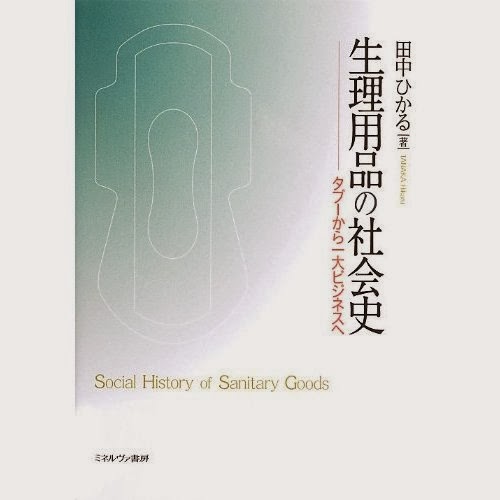
Social History of Sanitary Goods: From Taboo to Major Business
Authored by TANAKA Hikaru
Published by Miminerva Shobo (August 25, 2013)

Activity Report for Preventing Cognitive Impairment No.5
“Responding to the Needs of Highly-aging Society: Ten Year History and the Future Outlook of NPO Cognitive Impairment Prevention Net”
Written by TAKABAYASHI Miyuki


Call for Activity Photos
Photos Showing Various Regional Activities toward the Week  (November 12 – 25, 2013) for Eliminating Violence to Women Wanted!
Visit the site below to see the slide show of last year’s photos.
http://wan.or.jp/topic/?p=330


Posted by FUKUOKA A.A.

11/01/2013

Child Abuse and the Poverty of Women

(From translator) In this article, author Haru Sugiyama explains two of her own books on child abuse. 


Abuse: Two abandoned children in Osaka
Author: Haru Sugiyama
Publisher: Chikuma Shobo (September, 2013)
Hardcover (265pages)

In the summer of 2010, two children, aged three and one, were found lying on top of each other, starved to death in a studio apartment near the Minami downtown district of Osaka. Their mother was a sex worker who worked at a sex-related parlour nearby. For fifty days, she did not return to her children, and was staying with a male acquaintance. On SNS (social networking services), she posted photos of herself on outings with her friends from her hometown of Yokkaichi, and of herself having fun at a club in Osaka.

Six months after the incident came to light, I met with the mother, Ms. Mei (an alias) in the reception room of the headquarters of the Osaka Prefectural Police Department. She thanked me for leaving offerings of sweets at the Buddhist altar for the children’s spirits. She was a calm young mother you would see anywhere. At the time of her marriage, Ms. Mei was a responsible family woman who made appropriate use of public support and was involved in establishing a mother’s club.

Ms. Mei divorced, left the house with the children, and moved several times to within the Mie Prefecture, Nagoya, then to Osaka, until her children died a grisly death. It was a mere year and a number of months. During that time, there was next to no contact from the children’s father, nor did he provide any financial support.

I approached administrative organizations which were involved in this case, and all of them appeared disturbed at Ms. Mei’s actions, stating, “This was something you would never see,” or “This was our first time experiencing something like this.”

Ms. Mei was sentenced to 30 years of imprisonment.


Neglect: Why did Mana die?
Author: Haru Sugiyama
Publisher: Shogakukan (November 2004)
Hardcover (253 pages)

In 2000, a three-year-old girl starved to death in a cardboard box in a company dormitory of a large steel manufacturer in Taketoyo Town, Aichi Prefecture. Based on the research I did for this case, I wrote Neglect: Why did Mana die? (Grand Prize Winner of Shogakukan Bunko Shogakukan Non-fiction Prize).


Mana’s mother was a housewife, and the incident took place in the family home. Ten years later, the mother and child isolated themselves and drifted. Her children eventually died.
The concept of gender for Japanese people has changed greatly in the past 20 years. Single-mother families have exploded in numbers since the mid-1990s. In the workplace, non-permanent employment has become the norm. Under the surface, great changes have been taking place in Japanese society.

Poverty in women is directly related to poverty in children. Ever since the Lehman shock in autumn of 2008, there has been an increase in young mothers with young children. These mothers have nothing to take pride in apart from their status as mothers; once they are cornered into harsh situations, they often turn on their children, whom they tend to mistakenly think of as their property.


When considering what will bring happiness to a child, it is important that mothers are allowed to step back from child-rearing. If it at least becomes commonly accepted that mothers are not the ones solely responsible for child-rearing, this can lead to happiness of many children.
What has become clear to me in writing this book is that abuse is a problem of discrimination. If values dictate that only the worthy will survive, and if these values become rampant, abuse will only become a more severe problem.

Since April, I myself have been involved in supporting children who are growing up in impoverished households. There are little Ms. Meis everywhere. And I am surprised at this reality.

I want the mechanisms of abuse to be known across a wider audience. I want to see growth in the kind of support that is deeply knowledgeable of these mechanisms. That is my wish. (Haru Sugiyama, author of this book)


Original article in Japanese on Wan's website.
Translated and adapted by Shana Rieko Shimizu and Naoko Hirose

10/17/2013

Asian Journal of Women's Studies Vol. 19, No. 3


Asian Journal of Women's Studies announces its newest volume.


Posted by Aya Kitamura

9/26/2013


On the occasion of the visit of Ms. Annemarie Jorritsma, Former Vice-Prime Minister of the Netherlands and current Mayor of Almere, we have the honour to invite you to the following seminar.

The Embassy of the Kingdom of the Netherlands

Political Section


Women in Public Office – Showing the Way to a Better Work-Life Balance?

A seminar on the promotion of gender equality

Of all OECD member countries Japan scores worst in almost all categories concerning gender equality. The current Abe government recognizes the need to tap the potential of the female workforce in its bid to revive the Japanese economy and set it on a sustainable course. How to forge change? Where to begin? Is it about empowering women, or does it go deeper and touch on the traditional roles of men and women, husbands and wives and fathers and mothers? Do women currently holding public office have an extra responsibility to move the debate forward? Or even to show what can be done?

This seminar hopes to further the debate on gender equality in Japan and maybe even come up with concrete proposals in that regard. The key-note speakers are well-known women who hold high level public offices in their respective countries. They will share their experiences as working women and their ideas for promoting gender equality. A panel of renowned experts will be asked to provide comments.  The audience will consist of (young) women and men either in business or public office actively looking to balance their ambitions with the demands of their private and work lives. Ultimately this seminar hopes to empower them and to identify change agents.

Date:              27 September

Time:              14.30 – 18.00 hrs.

Place:             Kikai Shinko Kaikan (seminar) http://www.jspmi.or.jp/kaigishitsu/access.html (Jp)

3-5-8 Shibakoen, Minato-ku, Tokyo 105-0011

Netherlands Residence (reception) http://japan-jp.nlembassy.org/locations

Language:      English and Japanese (En-Jp/Jp-En simultanious translation provided)

Key-note Speakers:

Ms. Annemarie Jorritsma, Mayor of Almere (since 2003), President, Netherlands Association of Municipalities (VNG), Formerly Vice Prime-Minister and Minister of Economic Affairs (1998-2002) and Transportation, Public Works and Water Management (1994-1998)

Ms. Yuriko Koike, Member of Parliament (Liberal Democratic Party), Formerly Minister of the Environment and Minister in Charge of Global Environmental Problems (2003-2005), Special Adviser to the Prime-Minister on National Security Affairs (2006), Minister of Defense (2007)

Ms. Emiko Okuyama, Mayor of Sendai (2009, reelected in August 2013), Vice-Mayor of Sendai (2007-2009), Head of the Board of Education of Sendai (2005-2007)

Respondents:

Ms. Kaori Sasaki, Founder and Chief Executive Officer, ewoman, Inc.

Moderator:

Yoko Ishikura, Professor, Graduate School of Media Design, Keio University

If you wish to attend this seminar, please send an e-mail with your name, function and organization to:

tok-pa@minbuza.nl before Friday 20 September.

You can also use this e-mail address for further inquiries, or call the Embassy at (03) 5776-5405.


by M.OGAWA 09/26/2013


5th Ewha Global Empowerment Program 2013 Winter
“Transnational Feminisms and Women’s Activism”

January 12 ~ 26, 2014

Ewha Womans University
Seoul, South Korea

Application Submission: September 30 ~ October 13, 2013


EGEP is a two-week residential educational program that takes place twice a year (summer and winter) offered by Ewha Womans University. According the MOU between Ewha Womans University and UN Women, this program aims to promote education for women and gender equality in Asia and Africa by empowering women working in non-governmental public sectors and by nourishing the next generation of women leader.

Program Goals     On completing this program, participants will have:
 improved their theoretical knowledge and practical capacities from a gender perspective;
 broadened their understanding of women’s lives, women’s issues, and women’s rights in Asian and African contexts; and
 strengthened their leadership capacities to build women’s solidarity and cooperation in local, national, and transnational contexts.

Programs     While a more specific EGEP curriculum will be provided separately, the following are the major activities that participants may expect from the program:
 Lecture Seminars
 Open Forum
 Action plans
 Social Hours
 Study Tours to Korean NGOs
 Cultural Events

Eligibility     With minimum three years of experience, women activists working in international and national non-governmental public sectors in Asia and Africa, such as NGOs, NPOs, civil society organizations, including individuals working independently are encouraged to apply for this program.

Number of Participants: 20~25

Selection Criteria     The selection committee will evaluate the applicants based on the following criteria:
 field experience 25%
 expertise in women’s issues 25%
 potential as next generation of women leaders 25%
 contribution to the community 25%

Application Requirements

 Application Form
 Curriculum Vitae
 Statement of Purpose
 Essay
 Letter of Recommendation
 A Scanned Copy of Passport

Language     English is the official language of the EGEP.

Funding     Ewha Womans University provides the funding to cover fees for the tuition, dormitory, and a two-week allowance for all the participants. Funds for airfare will be awarded only to the participants from ODA beneficiary countries.

Contact Us     For more information, please visit the website of the organizing institution, Asian Center for Women’s Studies, at
http://home.ewha.ac.kr/~acws/eng/ or contact us via email at egep@ewha.ac.kr.


Note:
  1. Application requirements should be submitted online (http://egep.ewha.ac.kr).
  2. All forms are downloadable at the Asian Center for Women’s Studies (http://home.ewha.ac.kr/~acws/eng/).
  3. Successful candidates will be informed individually via e-mail on November 15, 2013.
  4. Every selected participant is required to submit a 5-page paper regarding women and/or gender issues which will be presented in the Forum.
  5. The email inquiries received during Chuseok, the Korean thanksgiving days from September 18 through 22, will be attended to after the end of the holiday.

by M.OGAWA  09/26/2013

9/18/2013

Film Screening Leonie and The Director's talk

Event Title: Film Screening Leonie and The Director's Talk
Event URL: Film Screening Leonie and The Director's Talk
Organizer: The Group of watching Leonie in Osaka / Osaka Gender Equality Foundation
Organizer's URL: http://www.ogef.jp/
Date: Saturday, October 19, 2013
Time: 10:30-16:30
Venue: Dawn Center (Osaka Prefectural Center for Youth and Gender Equality) Hall
Venue URL: http://www.dawncenter.or.jp/shisetsu/map.html
Contact Information: 06-6910-8624 Osaka Gender Equality Foundation


Brochure

 "Mother, I'm going to take this child to the country called Japan."
The true life story of Leonie Gilmour, an American woman, who gave birth to a son: Isamu Noguchi, the world renowned sculptor, and lived through quite an eventful life herself.
Crossing the border, and transcending time, this emotional masterpiece reaches the hearts of people around the world.
Overseas distribution version is on screen for the first time in Kansai!
★Official website for Leonie is here.
  http://www.leoniethemovie.com/

Details
What acclaimed director Hisako Matsui decided to challenge as her third film was the life story of Leonie Gilmour, the mother of Isamu Noguchi.She had already moved total two million audiences with her former works, Yukie and Oriume which describe the bond of family. 
Director Matsui had read the book  Masayo Duus’The Life of Isamu Noguchi and impressed very much. Then she spent seven years working through fourteen drafts of the screenplay and making the film.

On this day, we invite Director Matsui to talk about her feelings and messages of Leonie.

~Screen Time~
First
10:00 Doors open
10:30 Director Matsui talks
11:10 Screening starts

Second
13:30 Doors open
14:00 Director Matsui talks
14:40 Screening starts

Original Article on the WAN Website (September 4,2013)
Translated and Adapted by T. Muramatsu