Showing posts with label Book (B-WAN). Show all posts

4/09/2015

New Release of the Voices from Japan

FEATURE: Hate Speech toward Women: A Discussion from the View Point of
Gender


Introduction

Special Report
Deliberately Incited Discrimination against Women:
Gender-discriminatory remarks of public officials
By Nobuko Kamenaga

Fighting Hate Speech around the Comfort Women Issue
By Ban Chongja

Japanese Government on Discrimination: Issues of Discrimination against
Korean Schools and Japanese Military “Comfort Women”
By Wooki Kim

Anti-Imperial System and Anti-Hate Speech 25
By Daiko Sakurai

So Much Hatred of Women:
The Link between the Homosocial Internet and Current Anti-Korean
Sentiment
By Rie Kaiwa


Posted by FUKUOKA A. A.

3/31/2015

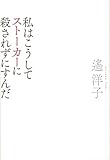
"This is how I avoided being killed by stoker" by Yoko Haruka

Based on my personal experience, I thought about the reason why stalking incidents never die and what we can do about it  

I wrote this book only for "preventing the worst."

That means " not to be killed."
In fact the entertainment industry is pearls of wisdom about fighting against stalker.

Watching the news of victims almost every month, I thought the time has come to make them publicly known and decided to get off my backsides.

I hope this will reach to someone with fear.


“This is how I avoided being killed by stoker”
Written by Yoko Haruka
(Chikuma Shobo, 2/5/2015)


Original article written by Yoko Haruka
Translated by T. Muramatsu


2/28/2015

Foreword for Chinese Edition of “Woman-Haters: Misogyny in Japan”

Chizuko’s Blog No.82

February 9th, 2015


A Chinese translation (in the simplified Chinese characters) of my book “Woman-Haters” has been published. I have learned the Chinese title is 『厭女症』(Woman-Hater Syndrome). The following is what I wrote as the foreword for this Chinese edition. Also a Korean translation is now under way.


“Woman-Haters: Misogyny in Japan”
Written by Chizuko Ueno
(Kinokuniya Shoten, 6/10/2010)

*************************************

I’m happy to find that they have decided to translate my book “Woman-Haters.” The subtitle of the book is “Misogyny in Japan,” and I believe we can apply this idea to many different societies --- “Misogyny in China,” “Misogyny in Korea,” or “Misogyny in Vietnam,” for example. In the first place, in writing this book, I was inspired by “Between Men: English Literature and Male Homosocial Desire,” a work by Eve Sedgwick, an American scholar in gender studies and English literature. So, obviously, we could also have “Misogyny in Britain” and “Misogyny in America.” Unfortunately, it is difficult to imagine a society without misogyny.

This book consists of a theory and its practice. The triad of homosociality, homophobia and misogyny --- a theoretical apparatus which Sedgwick provided us --- is very useful. Thanks to this theory, we can understand how different homosociality and homosexuality are and why homosexual males tend to be “feminized.” And above all, we learned from her theory that masculinity is defined as “not being (like) a woman,” which means putting women outside of men.

Because this theoretical apparatus is so sharp-cutting you are tempted to cut what you have using it. Like “Oh, yes, that group is homosocial,” or “Now I understand that womanizer is in fact a woman-hater.” And as in Japan today, so also in China, you will find there are so many situations you can easily explain with this theoretical apparatus. That is a shame, since it reflects the fact that men are not willing to change at all.

“Women support half of heaven,” was a wonderful phrase that we learned from socialist China. However, what we have heard after their “Reform and Liberation” are only stories no better than those in capitalist countries, including companies’ preference for men and a job shortage for women. I was astounded when I learned of a phenomenon called 婦女回家 (women returning home) in China. While Japanese women want to escape from being housewives, do Chinese women really want to do the opposite and go back home and become full-time housewives? The change of society is full of contradictions. Apparently, the difficulties women are suffering from in their lives are the same in all countries and under all political systems. China has its own misogyny.

As you know, the Japanese language has developed as a kind of creole by importing foreign languages like Chinese and English. You can see that in the mixture of hiragana (original Japanese phonetic characters), kanji (adopted Chinese characters), and katakana (phonetic characters used in describing loanwords from foreign languages) in written Japanese. Thus, the Japanese language has historically imported foreign ideas quite freely. But at the same time, it has failed to translate those ideas to Japanese. In Japan, the word “feminism” or “misogyny” has been accepted as a katakana loanword as it is. Meanwhile, in China, “feminism” is called 女性主義 (women-ism) and “women’s center” is called 女性中心 (women-center), which impressed me. Also, I was deeply impressed to learn that this book of mine would be translated as 『厭女症』 (“Woman-Hater Syndrome”). If it is a “syndrome,” it should be a distinct medical disorder. Then, how differently would “homosocial” and “homosexual” be translated? I’m all curiosity.

This disorder of woman-hater syndrome affects not only men but also women. An advantage of the idea of misogyny is that it can explain the dark side of women too. As I explained in the book, women's misogyny is much more troublesome than men's, because it can turn to self-hatred. If we realize this, we may solve many problems including why women could be easily divided and have conflicts over men, why there is a saying “Women’s enemies are other women,” or why mother-daughter relationships often tend to be awkward. Well, curing the disorder would not be so easy, but to realize the fact can at least be the first step.

Feminism in Japan has been influenced by many foreign countries. This book also has been influenced by Sedgwick, an American scholar in queer theory, as I stated above. And some people say that Japanese feminism is no more than an import from abroad. But I would like to counter this argument with a quote from Gayatri Spivak, a well-known scholar in post-colonial studies, who was born in India, studies English literature, has permanent U.S. residency, and teaches at Columbia University in New York. When she visited Japan to attend a symposium on gender theory, a Western scholar asked her if “gender” was not an idea which did not originally exist in Japan. Then she replied, “No matter where an idea was generated, if it is useful, you should use it.”

When a theory is applied to practice, it is customized according to the places,  subjects and contexts it deals with. For readers of the book, it would be hard not to apply the theory to their own societies, to try to solve the problems they have. As I discussed misogyny in Japan, I expect some Chinese readers will probably discuss misogyny in China in the near future. I hope I can read their books in Japanese translation. And what if there are any phenomena this theory cannot explain? I should welcome them as a sign that society is getting away from misogyny.

---------------------------------------------------------------------
Original article written by Chizuko Ueno
Translated by A. Tawara

12/30/2014

Médée in Operas: Misogyny in Modern Europe


The following is a translation of Rinko Umeno’s introduction of her own book Médée in Operas: Misogyny in Modern Europe.

I was a student studying vocal music at Tokyo University of the Arts when the movement of women’s liberation and student power was extremely active. The university president’s office was occupied. The movement was lead mainly by students of the faculty of fine arts, a part of the All-Campus Joint Struggle Committee. Although I was a student of the faculty of music, I remember that a few other students and I slept in the corner of the president’s office. Around that time, I also experienced a bitter relationship with a man and unreasonable discrimination against women in the movement itself.

After the All-Campus Joint Struggle Committee was defeated, I met many women who had joined the women’s liberation movement and shared sadness and pain with each other. It was a valuable experience. After that, I became a wife and a mother.  While I continued to be a musician, I had a chance to run for an election for the Yokohama City assembly councilor and won the election in 1995. After I served 2 two terms for eight years, I ran for an election to Kanagawa Prefectural assembly but I was defeated in the election.
When I was shocked and depressed, my daughter, who was a student of Yokohama National University, encouraged me to go and listen to university lectures, saying “university is an interesting place. Why don’t you audit a lecture?” Since I had had all the time in my hands all the sudden, I attended “A History of Islamic Civilization,” a course given by a German professor. It was two years after 9.11 had occurred. I thought I could not understand the world without knowing Islam. The lecture was so interesting that I officially entered the university at the post graduate level next year.

It took 8 years and a half to complete the courses and to get a doctoral degree in 2012. During this time, I studied in France for three years in total and went through a lot of adventures. The book, Médée in Operas: Misogyny in Modern Europe, is based on my doctoral thesis.

For many years I had thought about poverty, war, violence, and discrimination against women. I came to think that I could get a better grip of accumulating issues of present-day society if I became familiar with the origin of European civilization which formed the base of the present day. Opera was an emerging art form that was born in the beginning of the modern times, and thus it has the strong characteristic of the modern times. In operas, we often see longing for a woman and violence which includes murder, suicide, and rape. These show two sides of misogyny (sexism), an undercurrent of a mentality of modern Europe.

This book analyzed four opera librettos written in the era of Louis XIV, which feature Médée, a woman in Greek mythology. Médée appeared in operas and plays many times from the 16th century to the 17th century. It was during an absolute monarch characterized by a rigid class system and patriarchal society that Médée was represented as a witch. After deserted by her husband, she murdered her husband’s lover, a king who is the father of the lover, and her own two sons with the same husband for revenge. Why in that era was the story dramatized many times? Through analysis, I looked at the essence of misogynic characteristics of modern Europe. As a result, this book was born. (Author: Rinko Umeno)

Médée in Operas: Misogyny in Modern Europe
Published on November 10th, 2014
Publisher: Suiseisha
Telephone: 03-5689-8410
Ask the publisher or the author about the book.


Translated by Atsuko Ishikawa

7/31/2014

Women Who Confronted with Their Days--- 8 Women in the Tumultuous Meiji Era

This is a biography of eight women who lived the tumultuous Meiji Era(1868-1912): Chiyo AOYAMA, Nioko WAKAE, Empress Haruko (the wife of Emperor Meiji), Kakei ATOMI, Osamu TAKABA, Ei WADA, Etsuko SUGIMOTO, and Kikue YAMAKAWA. They all had strong will and a sense of responsibility to get through the period.

 ‘Never Abandon the Desire to Learn’ Chiyo AOYAMA: a member of the inaugural class of the Tokyo Women’s Teacher’s School (the current Ochanomizu University). She is the mother of Kikue YAMAKAWA.

 ‘Objection to the Meiji Government’ Nioko WAKAE: The private tutor of Empress Haruko. She advocated the exclusion of foreigners as a Cofucian and was expelled from Kyoto by the founders of the Meiji Government, such as Tomomi IWAKURA.

 ‘To Be the “Model” of the Japanese Modern Women’ Empress Haruko: The empress dowager praised as the “spirit of the Japanese royal family” in the dawn of the modern Japan.

 ‘Strategies to the School Administration!’ Kakei ATOMI: The founder of the current Atomi University. She introduced liberal arts to her school while implementing the traditional Japanese-style education for women.

 ‘Training Rough Guys with Spirits of Rebelliousness’ Osamu TAKABA: The head of a private school called Koshi-juku. She was a Cofucian and dressed as a man. One of her students was Mitsuru TOYAMA. Toyama went on to be the leader of Genyosha, one of the Japanese main political organizations at that time.

 ‘Taking the Responsibility for the Encouragement of New Industry’ Ei WADA: A daughter of an official of the Matsushiro Domain. She worked for Tomioka Silk Mill and wrote The Tomioka Diary.

 ‘Working as a Cultural Bridge Between Japan and USA’ Etsuko SUGIMOTO: A daughter of an official of the Nagaoka Domain. She taught Japanese language and culture at Colombia University and wrote A Daughter of the Samurai.

 ‘Expressing Herself in a Bold and Frank Way’ Kikue YAMAKAWA: The wife of Hitoshi YAMAKAWA, who introduced Marxism to Japan as a communist. She stood in her political belief despite the suppression by the authority and became the first Director of the Women’s and Young Workers’ Bureau after World War II.

Some of them were so unique that they might have caused you some troubles if they had been your sisters or friends. Some did much more effort than no one ever could. You get overwhelmed by their remarkable energy and vitality, and moved by some tragedies beyond our imagination and dramatic events in their lives.

They went a little beyond the “conventional norms” before they knew it. Not all of them enjoyed honor and high social status or made their dreams come true. But when you imagine their lives from the anecdotes by those who knew them well, you can feel compassion for these women from the bottom of your heart. “Compassion” is not enough to describe the feeling you have when reading about them; it’s a kind of “co-vibration.” It should be a waste not to know such evocative stories of their lives.

This book includes 80 pictures and figures, as well as three columns, so that it would be accessible by those who may not be familiar with the Meiji Era. This book will provide you with a good opportunity to discover about these women.

--------------------------------------------------
Original Article written by Chizuru SAKAKIBARA (The author of this book)

Translated by N. TAJIMA

4/29/2014

Asian Journal of Women's Studies Vol. 20, No. 1

Asian Journal of Women's Studies announces its newest volume.

Asian Center for Women's Studies Ewha Womans University http://acws.ewha.ac.kr

Posted by T. Muramatsu

2/27/2014

Book Review for “ECCE HOMO -- Essay on Men”


“THERMAE ROMAE “ is a blockbuster Japanese comic series which connects Ancient Rome and contemporary Japan through bathing culture.

Mari Yamazaki, author of the series, talks in depth about cool guys of all ages and cultures and their extraordinary skills and fertile visions, from Hadrian and Raphael to Kobo Abe and Steve Jobs. All of them are cosmopolitan men who defied the established ways of doing things and opened up new dimensions. The lives of these men evoke the image of Yamazaki’s own life in which she went to Italy at the age of 17 and has traveled around the world since.

One of the best things we can learn from this book might be the suggestions of how we ourselves can lay a path to a new age; how every one of us can “sow seeds of renaissance,” as Yamazaki tells us while shaking up Japan’s introverted and passive mentality. 

This is a powerful book, which would give a good kick up the backside to women who want to live a more ambitious life and also to men who want to come out of their shells.

---------------------------------------------------------------------
Original article written by Nanami Torishima, the editor (http://wan.or.jp/book/?p=7595)
Translated by A. Tawara

Book Review of “The 19th Century for Girls – From the Little Mermaid to Alice in Wonderland”


The Little Mermaid Was Dressed in Men’s Clothing!


I was amazed to learn that the Little Mermaid dressed like a man – a fact which Akiko Waki points out in her book “The 19th Century for Girls – From the Little Mermaid to Alice in Wonderland.”

This led me to open “The Andersen’s Fairy Tales” from Iwanami Paperbook Libray (translated Suekichi Ohata). The Little Mermaid fell in love with the Prince and came to the human world, and there it says, “The Prince had them tailor men’s clothes for the Mermaid and had her accompany him when he went for an excursion on a horse. The two of them went through a fragrant forest.”

On the other hand, according to Waki, the same place in The Collected Works of World Literature for Children (translated by Hiroto Hirabayashi) version says, “The Prince made a saddle so that he could ride on a horse with the Mermaid. The two of them went through a fragrant forest.” In the original Danish version, the Mermaid is dressed in men’s clothes.

Waki notes the difference in her book. “The Hirabayashi version means that the Memaid in her feminine clothes is riding double on a horse with the Prince. In contrast, if the Prince ‘had them tailor men’s clothes for her,’ it means she was riding on a different horse and accompanying him like an attendant. This difference cannot be overlooked.”

Once we have learned that the Little Mermaid was dressed like a man, a completely different -- active and hermaphrodite – image of “Mermaid” from the traditional one comes up. When we focus on the “men’s clothes,” the teary ending of the tale could possibly be interpreted in another way.

---------------------------------------------------------------------
Original article written by lita (wan.or.jp/book/?cat=1)
Translated by A. Tawara

11/01/2013

Child Abuse and the Poverty of Women

(From translator) In this article, author Haru Sugiyama explains two of her own books on child abuse. 


Abuse: Two abandoned children in Osaka
Author: Haru Sugiyama
Publisher: Chikuma Shobo (September, 2013)
Hardcover (265pages)

In the summer of 2010, two children, aged three and one, were found lying on top of each other, starved to death in a studio apartment near the Minami downtown district of Osaka. Their mother was a sex worker who worked at a sex-related parlour nearby. For fifty days, she did not return to her children, and was staying with a male acquaintance. On SNS (social networking services), she posted photos of herself on outings with her friends from her hometown of Yokkaichi, and of herself having fun at a club in Osaka.

Six months after the incident came to light, I met with the mother, Ms. Mei (an alias) in the reception room of the headquarters of the Osaka Prefectural Police Department. She thanked me for leaving offerings of sweets at the Buddhist altar for the children’s spirits. She was a calm young mother you would see anywhere. At the time of her marriage, Ms. Mei was a responsible family woman who made appropriate use of public support and was involved in establishing a mother’s club.

Ms. Mei divorced, left the house with the children, and moved several times to within the Mie Prefecture, Nagoya, then to Osaka, until her children died a grisly death. It was a mere year and a number of months. During that time, there was next to no contact from the children’s father, nor did he provide any financial support.

I approached administrative organizations which were involved in this case, and all of them appeared disturbed at Ms. Mei’s actions, stating, “This was something you would never see,” or “This was our first time experiencing something like this.”

Ms. Mei was sentenced to 30 years of imprisonment.


Neglect: Why did Mana die?
Author: Haru Sugiyama
Publisher: Shogakukan (November 2004)
Hardcover (253 pages)

In 2000, a three-year-old girl starved to death in a cardboard box in a company dormitory of a large steel manufacturer in Taketoyo Town, Aichi Prefecture. Based on the research I did for this case, I wrote Neglect: Why did Mana die? (Grand Prize Winner of Shogakukan Bunko Shogakukan Non-fiction Prize).


Mana’s mother was a housewife, and the incident took place in the family home. Ten years later, the mother and child isolated themselves and drifted. Her children eventually died.
The concept of gender for Japanese people has changed greatly in the past 20 years. Single-mother families have exploded in numbers since the mid-1990s. In the workplace, non-permanent employment has become the norm. Under the surface, great changes have been taking place in Japanese society.

Poverty in women is directly related to poverty in children. Ever since the Lehman shock in autumn of 2008, there has been an increase in young mothers with young children. These mothers have nothing to take pride in apart from their status as mothers; once they are cornered into harsh situations, they often turn on their children, whom they tend to mistakenly think of as their property.


When considering what will bring happiness to a child, it is important that mothers are allowed to step back from child-rearing. If it at least becomes commonly accepted that mothers are not the ones solely responsible for child-rearing, this can lead to happiness of many children.
What has become clear to me in writing this book is that abuse is a problem of discrimination. If values dictate that only the worthy will survive, and if these values become rampant, abuse will only become a more severe problem.

Since April, I myself have been involved in supporting children who are growing up in impoverished households. There are little Ms. Meis everywhere. And I am surprised at this reality.

I want the mechanisms of abuse to be known across a wider audience. I want to see growth in the kind of support that is deeply knowledgeable of these mechanisms. That is my wish. (Haru Sugiyama, author of this book)


Original article in Japanese on Wan's website.
Translated and adapted by Shana Rieko Shimizu and Naoko Hirose

7/29/2013

This Book Is an Event, Prof. Muta!

--- Book Review for “That Love Is Sexual Harassment, Boss!”


It’s been nearly a quarter-century since the first sexual harassment lawsuit in Japan (the Fukuoka Sexual Harassment Case in 1992). Until then there was no such term or idea of sexual harassment in this country. And one of the key players who got it entrenched here as sekuhara was Proffessor Kazue Muta, the author of this book.


You might think there must be a lot of rebukes to men in this book if Ms. Muta, a renowned feminist, says, “. . . is sexual harassment!” But, in fact, I don’t think I’m the only one who felt her compassion for those doing the harassing at the back of her deep insight. For example, she comments like this, referring to somebody accidentally saying or doing sexually discriminating things:

“If you are an ordinary man, it’s possible that you will occasionally be a little under the influence of drink, and might let slip some barnyard words in front of your female staff. That’s for sure a yellow card for sexual harassment. But when you’re sober the next morning and realize you said the wrong thing, just apologize straightforwardly. Then it will hardly be a serious affair.” (p.54)

This remark of Ms. Muta must come as such a relief to not a few people (perhaps including me).

For a long time there has been common belief that feminists are man-haters. But I believe this book demonstrates that a feminist attitude which can provide women with a comfortable work environment and support their lives will lead to a better society for men also.

Actually, many sexual harassment cases are not fundamentally black and white. But most of them end up being “black” after the longtime development of troubled relationships between colleagues, a boss and a subordinate, or a teacher and a student. (p. 136)

This book is full of practical lessons about things such as, “the deep division between men and women,” “the way things become complicated,” “sexual harassment advisories and sexual harassment warnings,” “three requirements of an office romance,” and even “in case you should be sued.”

Professor Chizuko Ueno recommends this book as “a household necessity like Home Health Handbook.” Absolutely. This is a must-read not only for men, but also for women in order to understand the feelings of “insensitive” middle-aged men.

I feel guilty that I read through the whole book with such amusument despite the matter’s life-changing seriousness.

I bet this book will be an event in the sociology world. At the end of this book there is a story of Ms. Muta’s “personal experience of secondary damage from sexual harassment,” which signals her long, hard, everlasting battle against sexual harassement.

---------------------------------------------------------------------

Original article written by moomin (http://wan.or.jp/book/?p=6940)


Translated by A. Tawara